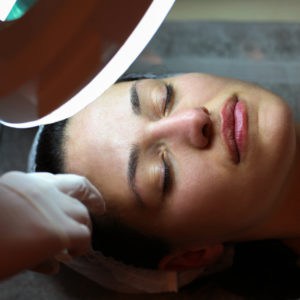
Photodynamic therapy (PDT) with Levulan® is one of today’s leading, non-surgical answers to address a variety of skin concerns. PDT increases cellular turnover and stimulates collagen production to minimize pores and reduce oil glands. Commonly used to treat pre-cancerous lesions, it also has a range of other applications to improve overall skin texture, tone, anti-aging and acne.
At Timeless Skin Solutions we believe everyone deserves healthy, beautiful skin. Since 2004, our physicians have been transforming skin with Photodynamic Therapy in Central Ohio.
Get answers to your most pressing questions about this specific treatment. Here are a few that we hear most often:
View our Photodynamic Therapy Before & After Treatment Instructions.
Total treatment time lasts between 60-90 minutes. 45-60 minutes is waiting while Levulan is incubating – Bring a book! In some cases the Levulan will be left on the skin to incubate overnight. In these cases patients are asked to avoid the sun until the following days treatment.
You can feel confident knowing that the procedure will be done by highly trained physicians.
Photodynamic therapy has a wide range of reactions so each patient’s experience is different. Some feel intense heat in the skin, while others have a slight tingling sensation for up to 1 hour. Over the several days following treatment, some patients may feel as though they have a mild sunburn or may experience itching. Most feel relief within 1 to 3 days. We will provide instructions for home remedies to make the healing process more comfortable. In all instances, the Timeless staff is here with you to implement comfort measures as needed.
Patients require between 1-4 treatments, 1 month apart. The actual number of treatments will depend on the patient’s skin and the physician’s recommendation.
Patients should expect redness, peeling and some mild swelling 4 to 5 days after treatment along with 7 days of social downtime during the healing process.
Results can be seen as soon as 2 weeks after treatment. Results are compounded with each treatment.
Expect results to last up to 1 year. As with other aesthetic treatments, lifestyle plays a role as well. A skin care maintenance plan helps protect and extend your results. Your medical provider at Timeless will develop a customized plan for you.
Yes, PDT can be combined with other treatments such as Botox, fillers, DermalInfusion and Dermaplane. Our medical providers can assist in creating your personal skin treatment plan to achieve the results you desire.
If your treated area is tanned or recently exposed to the sun, we recommend that you wait until the tan fades before PDT. This will reduce side effects such as blisters or crusts. If you prefer to have your tanned skin treated, we will reduce the intensity of treatment.
Have a question that isn’t answered here? Just contact us for an answer.
Photo means “light” and dynamic means “action”, meaning photodynamic therapy is the use of light or laser energy to act against skin conditions including sun damage, precancerous cells (actinic keratosis), acne, and inflammatory rosacea.
PDT is a two-step process. In the first step, a physician applies Levulan®, a clear, painless chemical photosensitizing agent to the skin. In the second step, a Blue Light and/or an Intense Pulsed Light (IPL) is used to activate the Levulan® for approximately 8 to 16 minutes.
Fantastic! We’re already looking forward to meeting you. The first step is to schedule a consultation so that we can determine if this is the best option for you. Simply visit our appointment page to choose a scheduling option that works for you.
There is a consultation fee of $60 due at the time of your appointment; however, this fee is deducted from your first procedure.