|
Laser assisted and light based hair removal has been going through
a significant evolution over the past five years. At this point
in time we may effectively reduce or remove hair for several
months to over a year in some individuals. The vast majority
of people have reported a reduction, lightening and softening
of hairs, as well as a delay in hair regrowth.
Currently, I use the high energy, long pulse Nd: YAG laser and
ProWave intense pulsed light to remove hair. The light targets
the pigment in the hair follicle. When it comes into contact with
the pigment it causes the color to break into miniscule particles.
This process causes an expenditure of heat which damages the root
of the hair, hence impeding its growth.
Quick facts about laser hair reduction
• Age,
ethnicity, weight, hormones, diet, medication and metabolism
all play a role in the location and thickness of hair on the
body.
This contributes to the resilience Hair Removal
of the hair follicle to destruction with the laser light.
• More than one treatment session is necessary because hair grows
in cycles. The laser targets hairs that are in the active growth
phase of the cycle. Since some hair follicles may enter their growth
cycle after a treatment, multiple treatments may be required to
deliver optimal results. I have found that in most cases the best
results are achieved between 4 to 8 sessions, followed by maintenance
therapy. Good results are expected but can not be guaranteed.
• Laser and light assisted hair removal is not permanent. Treatment
with the light will eliminate the growth of some hairs and stunt
the growth of other hairs. This usually significantly reduces the
amount of hair and the thickness of the hair in a treated area.
• Treatment results will vary from patient to patient depending
on their skin color, hair color, the thickness and amount of hair
and where the hair is located on the body. Because the light targets
pigment, people with dark skin run the risk of the skin around
the hair losing pigment. This is much less likely with the Cutera
Cool Glide laser system than with intense pulsed light.
• The light treatment is minimally uncomfortable. A cooling device
attached to the laser, applied to cool the skin prior to the treatment,
helps manage the discomfort. My patients tell me that they feel
discomfort but no real pain during the procedure. Some areas are
more sensitive than others.
• Side effects are rare, but may include redness, swelling, lip
numbness, and or pigment changes. Scars may occur but are extremely
rare.
• Test sites may be performed prior to treating a large area so
the patient has an opportunity to see the potential results before
committing to a full treatment session. This is particularly beneficial
if the area to be treated is large.
How does the Laser and Light Assisted Laser Hair Reduction Work?
The laser is a non-invasive light therapy device specifically
designed to eliminate undesired hair from all parts of the body.
The light source generates a pulse of intense, concentrated light,
directed through a small, cooled hand piece, which is gently applied
to the treatment site.
This light energy passes through the skin, where the energy is
absorbed by pigment of the hair and hair follicle, causing selective
damage to the hair root without damaging the delicate pores and
structures of the skin. The wavelength of the laser and the light
source allows me to disable as many hair follicles as possible
with each treatment. The light is pulsed for only a fraction of
a second. The duration of the pulses is carefully determined so
that the energy will be absorbed by the hair follicles without
transferring excessive heat to the surrounding skin.
Some of the hair that was in the treated follicles is wiped off
immediately after treatment, and the rest is shed over the next
2-3 weeks. The body reabsorbed the hair roots that have been destroyed.
The surface of the skin is protected by a cooling head, which
glides over the skin before the laser beam. This selectively helps
to protect the skin, while effectively treating the unwanted hair.
How Does the Infrared Programmable Wavelength and Laser Differ
From Other Systems?
The ProWave 770 uses phase shifted light to maximize the light
energy used to treat hair removal and minimize the energy transferred
to the surrounding skin. This allows for greater safety of the
ProWave 770 from earlier IPL devices. This shorter wavelength
product is great for light skin or fine, light colored hair.
Three programs are available in this light source to optimize
treatment based on hair types and skin color. Large areas of
hair removal are optimally treated with this device.
The advantages of using a laser is that the longest available
deeper penetrating 1064 nanometer wavelength. It is safely used
on all people, even those with dark, tanned, or black skin.
The laser also allows me to adjust the duration of the pulse of
laser energy to best suit the thickness and color of the hair shafts
on different parts of your body. Some older laser systems lack
this degree of fine control. At the time of your consultation,
we will discuss which light source is right for your skin and hair
type.
What Areas of the Body Can Be Treated?
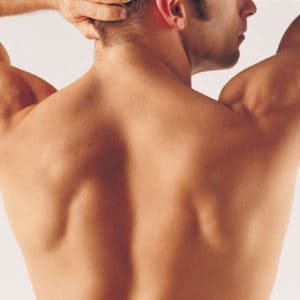
Most parts of the body can be treated. In women, the most common
areas for treatment are upper lip, chin, bikini line, arm, legs,
and underarms. In men, the most common areas for treatment are
shoulders, back, and the beard area. I do not treat eyelashes and
eyebrows, because of the potential risk of damage to the eyes and
constantly changing brow styles. The eyes are protected with special
eye shields during treatment.
What are the Benefits of Laser Hair Reduction Compared to Alternative
Treatments?
The primary benefits of laser hair reduction include:
• Larger areas may be treated with less discomfort than with electrolysis,
waxing, or tweezing.
• The laser and light combines speed, comfort, and long lasting
results.
• The laser and light works on any area of the body where a hair-free
appearance is desired.
Shaving, waxing and depilatory creams are all temporary methods
that must be repeated on a regular basis. These methods remove
the hair but leave the hair follicle intact. The hair re-grows
within one to four weeks in most cases.
Hair removal methods like plucking, waxing or sugaring, may actually
stimulate hair growth and can cause irritation. This happens because
one way the body defends itself against having hair pulled out
is to produce thicker, stronger, hairs which are harder to pull
out the next time. Waxing can be useful to temporarily get rid
of white hairs and peach fuzz hairs after you have completed a
course of laser treatment.
Laser and light assisted hair removal offers long lasting results,
and even if hair does eventually grow back, it is usually finer
in texture and lighter in color than the original hair, and much
less of a cosmetic problem.
What Are the Advantages of Laser and Light Assisted Hair Reduction
over Electrolysis?
With electrolysis, the operator inserts a needle into the hair
follicle and tries to have a needle tip reach the hair root. The
operator than triggers a small electrical charge to disable the
hair root. The hair from the follicle is then removed with tweezers.
One hair follicle at a time is affected.
Electrolysis can be a good technique for the removal of a small
number of hairs, hairs from where it is difficult to use the laser.
There is considerable variation in results between electrolysis
therapists. Therapy may take 2 hours per week for 2 years.
What Are the Risks of Laser and Light Assisted Hair Reduction?
Short-term side effects may include a slight reddening of the
skin or local swelling, which typically lasts less than an hour,
although it may infrequently last a few days. Although rare, there
can be increased or decreased pigment in the treated area. This
is seldom a major cosmetic problem, and generally resolves after
several months. Blisters (rather like a tiny sunburn) and possibly
a scar may occur, but are also very rare.
Is Laser and Light Assisted Hair Removal Permanent?
Permanent hair removal means all the hair is gone, forever. This
is no hair removal method which can guarantee permanent status.
The most realistic expectation after laser treatment is long-term
hair reduction. This means that after four to eight treatments,
the total amount of hair is greatly reduced (70-90%) and the hair
which does grow is often much finer and lighter in color. Most
people are very pleased with this degree of improvement, as long
as they know that this is what to expect, before they have laser
hair removal treatment.
Because lasers have only been used for hair removal in the last
ten years, we do not know if the results will last forever: however,
we do know that stable, long-term hair reduction commonly lasts
for at least two years, and some patients who had their laser treatment
six or seven years ago are still enjoying a high degree of hair
reduction.
Should I Expect to be Hair Free in the Treated Area After the
Series of Treatments?
No, most patients experience a 70-90% reduction in the amount
of hair in a given area, and also a reduction in the thickness
and color of the remaining hair, but you should not expect to be
hair free.
How Much Hair Will Grow Back, and How Fast Will it Grow Back?
The laser and light assisted devices work by destroying hair roots,
which are active at the time of treatment and which have enough
pigment to absorb sufficient laser energy. The hair shafts in the
treated hair follicles will fall out 1-3 weeks after treatment.
After the first treatment, hair regrowth may resume within a few
weeks or it may be anywhere from 2-4 months before any true hair
growth is observed, as previously dormant hair follicles become
active, and hair follicles which were stunned but not killed, recover
and start to produce hair shafts again. Reductions in coarseness
and color can occur independently of each other.
New terminal hair appearing in androgen-sensitive sites (mainly
the face, axillae and genital area) after successful laser epilation
could result from androgen-stimulated conversion of previously
dormant vellus hairs, which are not affected by the laser as long
as they remain dormant and unpigmented.
Why Are at Multiple Sessions Required?
All lasers and light assisted hair removal devices work by disabling
hairs that are in their active growth cycle at the time of treatment.
Hair follicles in their dormant phase have no hair shaft in them
and so can not be affected by the laser. Because hair follicles
cycle through active and dormant phases, additional sessions are
usually desired once the dormant follicles become active and also
to deal with hair follicles which were stunned but not killed by
previous treatment.
There is no
treatment that will kill 100% of the hair follicles, 100% of
the time.
The laser I use has the longest, most deeply
penetrating wavelength and special cooling to maximize the number
of disable hair follicles and to minimize the number that are only
stunned during each treatment session. At any one time, 50-85%
of your hair follicles are in the active (anagen) phase but only ¼ to
1/3 of your hairs have enough of the pigment in their roots to
absorb enough energy from the laser beam to destroy the hair root.
So, about ¼ to 1/3 of your hair roots are good targets for
the laser beam and can be damaged or destroyed in a single laser
session.
The number of treatments depends upon the desired degree of hair
reduction, the color of the hair, ethnic and genetic background,
hormonal status, area being treated, hair density, age, weight,
and medication.
Additional touch-up treatments on small troublesome areas can
be arranged. There is no safely limit on the number of treatments
a person can have.
Previous Laser or IPL Treatments? No Problem.
These devices have been successfully used on many people who were
not able to tolerate or did not have satisfactory results with
older systems.
Am I a Good Candidate for Laser Hair Removal?
People of all skin colors can be treated. Hair which is naturally
blonde, white, or light red does not have enough pigment in the
roots, and it cannot be reliably treated with any type of laser.
Laser and light assisted hair removal is not just for cosmetic
problems. Patients with excess hair because of medications, ingrown
hair in the beard area and folliculitis under prosthetic devises.
What Will Happen on the Treatment Day?
You should arrive with the area to be treated shaven within the
18 hours before arrival. Everyone in the treatment room will wear
protective goggles when the laser is turned on. The length of the
procedure itself can range from a few minutes to an hour.
If you decide before coming in that you would like to have additional
areas treated, please call ahead so that enough time in the schedule
can be added to accomomodate your needs.
A thin coat of clear gel is lightly applied over the skin then
the laser pulses are quickly and evenly applied.
Does it Hurt?
The laser emits light. Most people describe the sensation like
a rubber band snapping on their skin. There is no bleeding and
no open wound is created. Some people find the first treatment
more uncomfortable than subsequent treatments. Maybe this is because
there are more hair roots which are destroyed during the first
treatment or perhaps also because some people are more apprehensive
during the first treatment, because they are not sure what to expect.
Topical anesthetics can be applied for especially sensitive areas.
|